
On this page
Keep the first minute readable
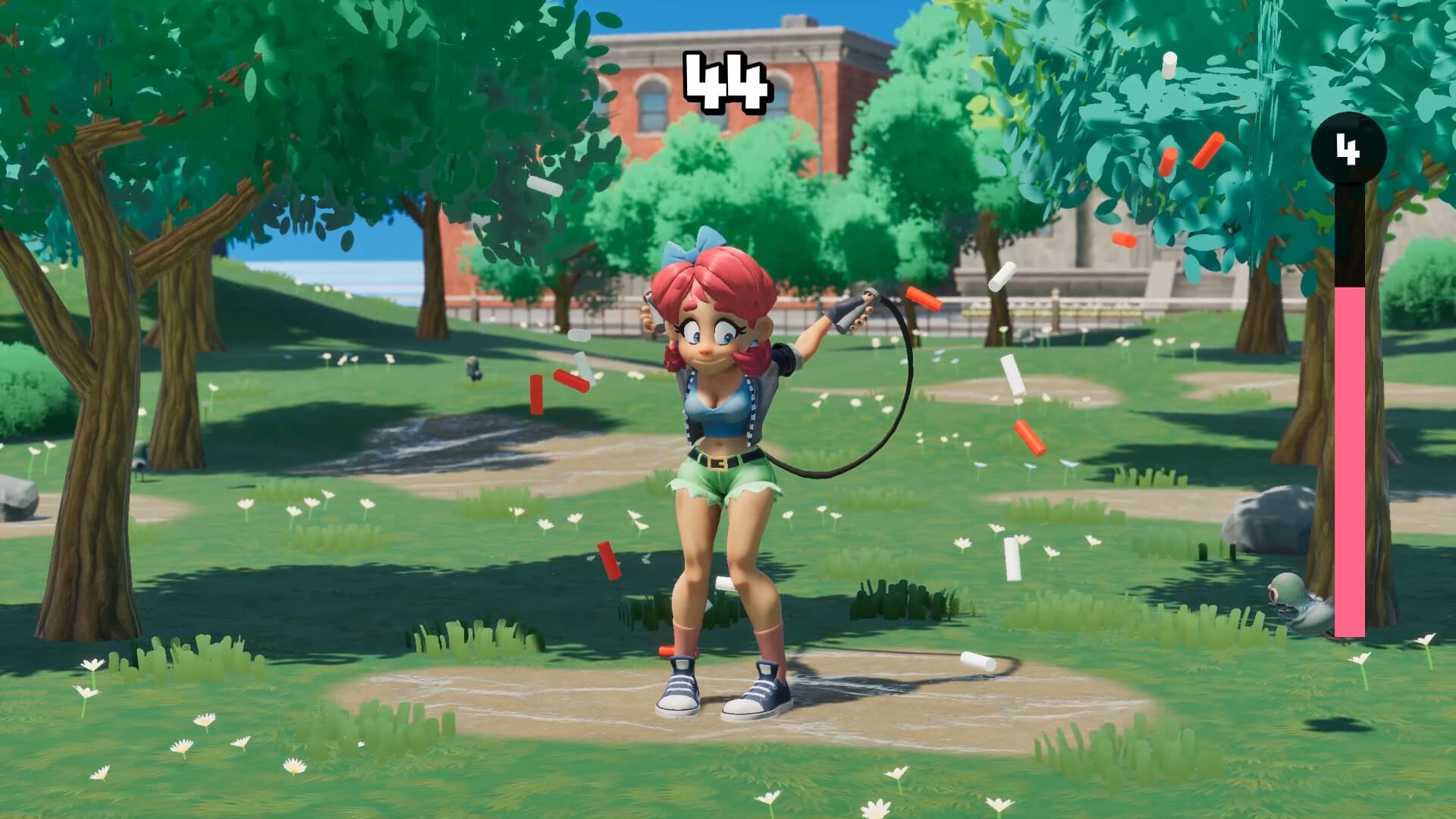
Open the run with a skip we can repeat. If the first rope still feels random, make it boring first. Change one thing at a time so we can tell what killed the run.
- Take height or a shield if the skip is already tight.
- Leave fire and extra ropes alone.
- Take Luck only if the landing already feels safe.
- After a new card, watch one full rotation before panicking.
Land where you can still see the next rope
Watch the rope hit the ground and plan the landing, not just the launch. A jump can clear this pass and still die because we held into the next one.
- Same short jump, over and over, teaches more than max holds.
- Near the top, look for the next rope.
- After Jump Height, relearn the landing.
- Use Rocket Fuel on purpose, not as a panic hold.
Ask this before you click
There is no best card. On the pause, ask what this run needs before comparing names.
- What’s about to kill us: landing, extra ropes, or slow cards?
- Which of these three actually fixes that?
- Are we going for the Moon, score, or just surviving?
- Can we feel this change on the very next jump?
Don’t add ropes you can’t read
Every extra rope is another thing to read. More ropes only help when one jump can clear a group of them, and we can still protect what we have.
- Shield a small set before adding another.
- Watch the whole pattern, not the nearest strand.
- Going for the Moon? Fewer ropes is often better.
- Score runs add quantity late, not first.
If Rocket Fuel runs out before the next card
If the fuel gauge empties before the next card arrives, plan a landing instead of holding on. A player reports a refill when an upgrade appears, but that is not a safety net until we see it work in this run. The high-score route explains how to build around the loop.
- Watch the gauge when a card appears.
- Keep a landing available until a refill repeats.
- Later levels can take longer; leave fuel in reserve.
Luck helps. Nobody knows the math.
Luck is a reasonable early pick once the jump feels safe. One player guide says it affects how quickly cards appear, but no official percentage is published. Watch what changes in your run instead of trusting a guessed number.
- Earlier Luck has more of the run to work.
- Look for LUCKY and cards coming faster.
- A quoted cap is not a confirmed rule.
- If the next landing is unsafe, take the survival card.
If the score stalls, check the fuel loop
If the run survives but the score barely moves, check whether another card arrives before fuel runs out. Do not add fire or more ropes to fix a loop that is not working yet. The high-score guide covers the full card sequence; twelve rope loops is one player's check, not a target we must hit.
- Can the jump reach another card?
- Does the fuel refill actually repeat?
- If not, keep the pattern readable and land safely.
If a Moon run starts looking like a score run
If we are aiming for the Moon but extra ropes or fire have made the pattern hard to read, stop following a score build. The ending route explains when to simplify the rope set and which later cards one player used.
- Is this run still for the Moon, or have our picks changed its direction?
- Can we protect the ropes we intend to keep?
- Treat any quoted height threshold as a player note, not a requirement.
Work backward from the missed rope
Start from the miss and look for the first card after which the rope became hard to read. If several cards changed the same jump, practice one change at a time next run. Never learned a clean skip? Start there.
- Late jump: watch the ground crossing again.
- Bad landing: shorter hold.
- Too many ropes: stop adding, shield or drop some.
- Cards too slow: consider Luck before more fuel.
- Fire wipe: go back to a protected skip.
Don’t treat these numbers as rules
These guides are young. The ~200,000 run, Luck caps, fuel refills and “twelve loops” are player notes, not developer rules.
- Don’t call a cited score a world record.
- Don’t treat a guessed cap as real.
- Don’t copy one order as the only order.
- After a Rocket Shoes patch, re-test.