
On this page
One player-reported card order
This is the score route on Builds. Early cards look like a Moon climb. Then we split: fire and extra ropes belong here, not on the way to the Moon.
Someone wrote up a run around 200,000. Useful as a picture of the loop. Not a record, not a formula.
- Jump Height and Luck first.
- Rocket Fuel once a normal jump already hangs.
- More ropes and speed after that loop repeats.
- Fire last, when losing a rope is easy.
First: make the jump long enough
Take Jump Height and Luck once the skip is readable. Stay around two to four ropes and shield what we have.
Leave Ignite alone. Fire looks like score. Early fire is usually a shorter run.
- Keep the pattern small enough to read.
- Shield before adding another rope.
- Fuel does nothing if the jump still can’t spend it.
Then: make Rocket Fuel refill
Add Rocket Fuel after height is already doing work. We want several rope passes — and later another card — inside one jump.
A player says a new card refills the tank. Watch the gauge when it resolves. Make that happen twice before we bet the run on it. First rope still random? Learn the jump first.
- Height makes the jump long.
- A player reports that Luck helps cards arrive sooner; no exact formula is published.
- Fuel may bridge one card to the next.
- Land until a refill has visibly repeated in this run.
Last: ropes, speed, fire
When cards start arriving before we land, add ropes and speed. Take fire only if a broken rope is easy to replace.
Later levels take longer. Leave more fuel in the tank. The tips page is the short version of this.
- More ropes after we can already stay up.
- Speed one step at a time.
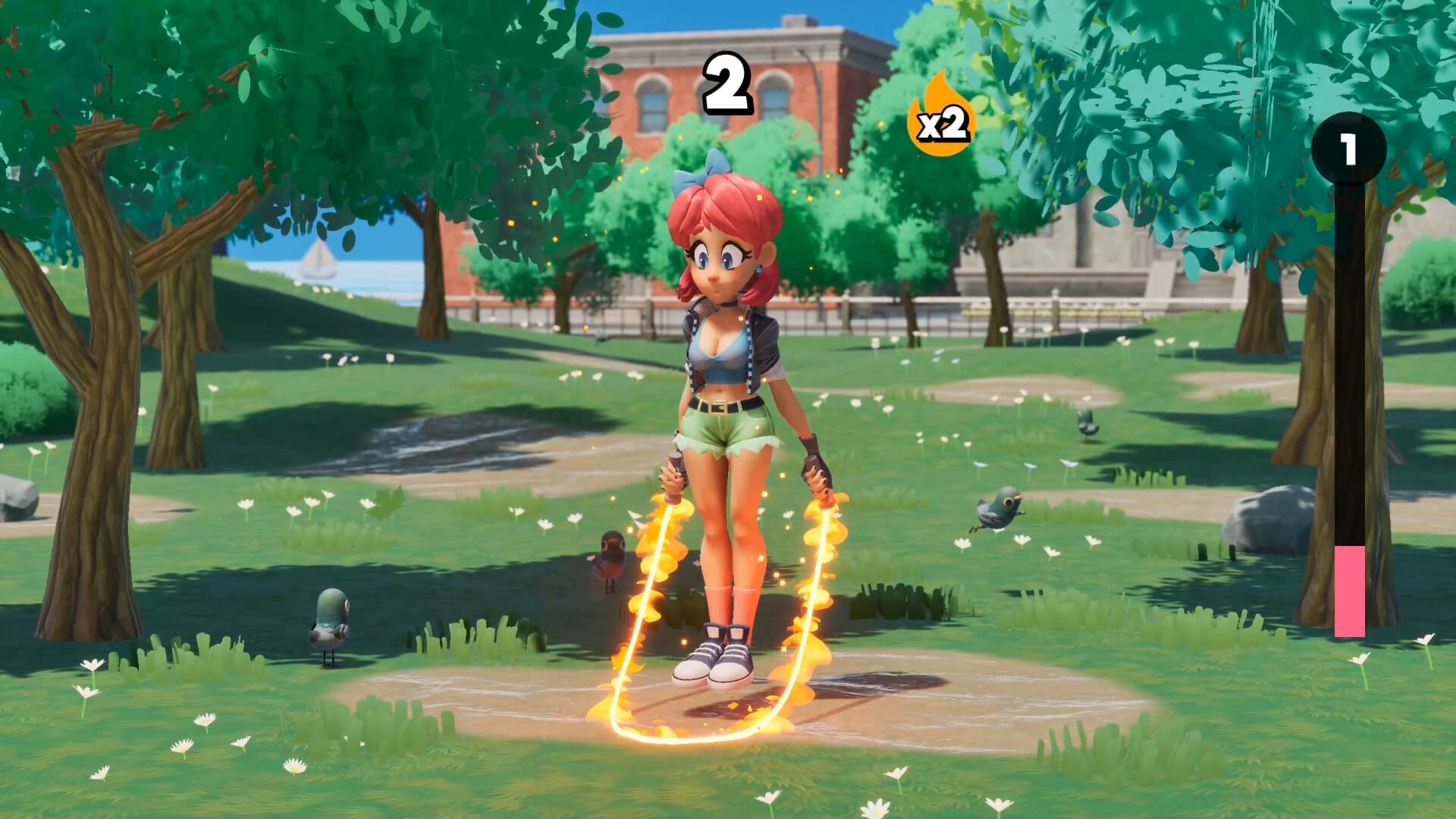
- Fire multiplies the counter. It is not the engine.
- Keep taking fuel as the gaps get longer.
Check the fuel gauge before adding pressure
Don’t wait for a magic number. One write-up used about twelve loops in a jump as a personal check. What matters to this route is whether the next card arrives before the fuel gauge empties.
- One jump clears several passes.
- Cards start showing up in the air.
- The gauge actually refills.
- We can do that bridge twice.
What kills a score run
Copying this order on a Moon run is how a clean skip turns into a miss. If we want the ending, that’s a different route.
- Fire too early.
- Extra ropes before they’re shielded.
- Fuel without enough height.
- Holding until the tank is empty.
- Treating ~200,000 as a world record.
When the score plan gets a different three cards
Three random offers mean this order is a route to attempt, not a shopping list. If Luck or height is missing, keep the current rope pattern readable and take the card that preserves the next landing. If Fuel arrives before a long jump is useful, do not stay airborne just to justify the pick.
When the next upgrade no longer arrives before the gauge empties, return to safe landings instead of assuming a refill. Fire and extra ropes can wait; neither repairs a broken airtime loop.
- No height yet: prioritize a jump you can land repeatedly.
- No fuel refill: land with room to read the next rope.
- Offered a risky score card: preserve the run before chasing the multiplier.
Compare the number the game actually shows
Write down the number the game actually displayed. A score total, a jump count and a creator's video title are not interchangeable, and this site does not certify a world record. The scoring formula has not been published by the developer.
After a promising run, record the visible score or count, the cards you had when it ended, and the first pick after which the pattern became hard to read. On the next attempt, change one choice. That comparison is more useful than copying a large number from a clip with a different stack.
- Label the HUD field, not just the biggest number in a screenshot.
- Keep one screenshot of the final stack if the game shows it.
- Note whether the miss followed height, rope count, speed or fire.
- Call a video record claim a claim unless its category and evidence are clear.